Writing / Design Operations
Design reviews as a delivery mechanism.
Treat reviews as a repeatable decision system that creates momentum, clarity, and a visible record of what changes next.
Article
A design review is not a ceremony at the end of a feature. It is a delivery mechanism: a repeatable way to bring the right evidence, people, and decision into the room before the cost of change rises. The best reviews make the next action obvious, whether that means progressing, revisiting, narrowing scope, or resolving a dependency.
Give every review a clear job
Different stages need different review questions. Early work needs help framing the problem and comparing directions. Mid-stage work needs feedback on hierarchy, interaction, and feasibility. Later work needs agreement that the experience is complete enough to build. Naming the review’s purpose stops a concept discussion from becoming a debate about polish, and stops a final decision from reopening settled strategy.
Record the decision, then follow the work
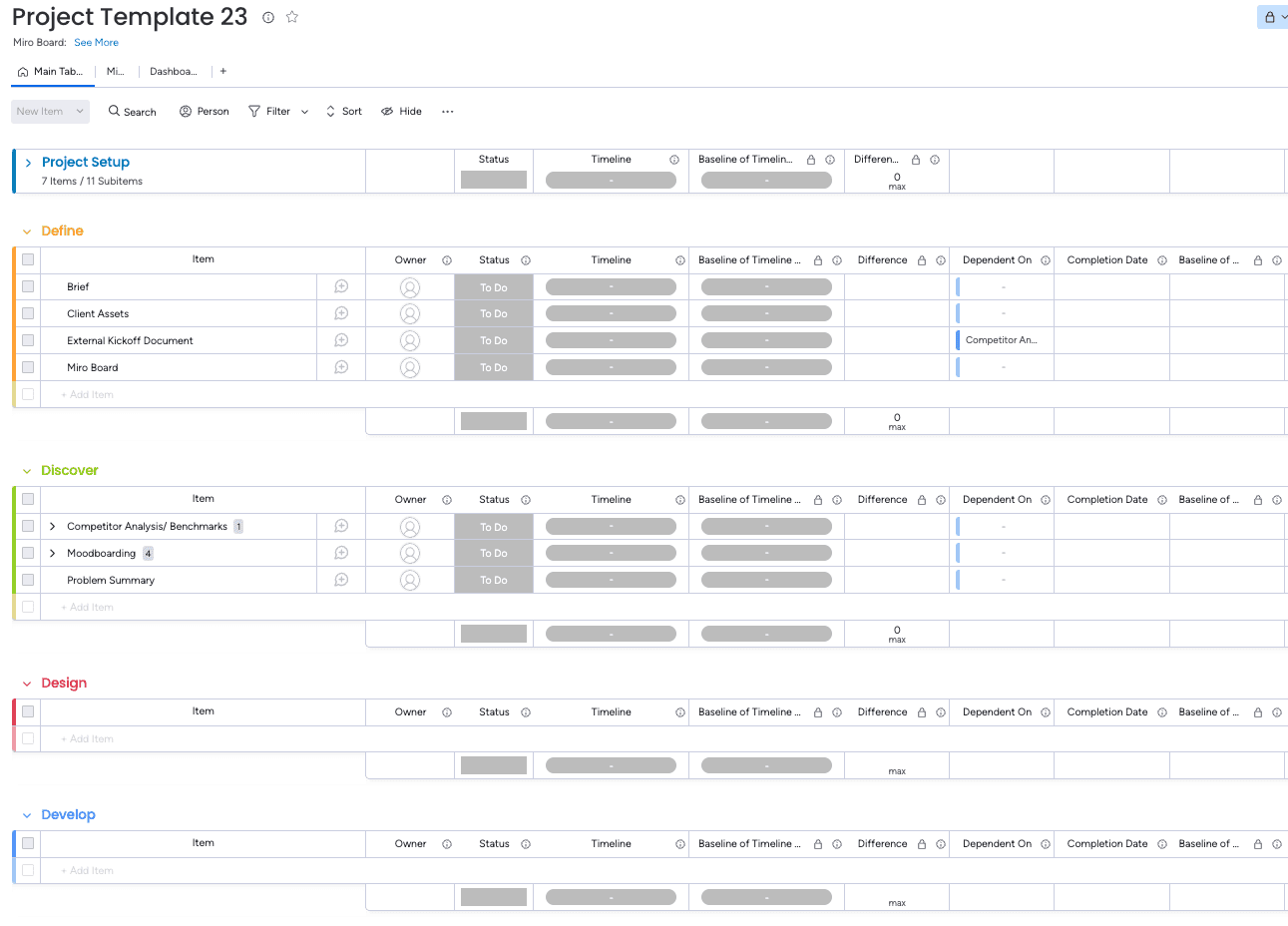
The review is only useful if its conclusion appears in the delivery plan. A short decision record should state what changed, who owns the next action, what remains unresolved, and when the team will look again. Feature and maintenance views give that decision a visible path through build, validation, and release. This is what turns useful critique into a decision system rather than a collection of notes.
Use progress views to surface risk early
Leadership does not need to approve every screen. Their value is in protecting direction, investment, priority, and customer impact. A concise view of progress and risk makes escalation timely without asking decision-makers to work through implementation detail.
Create a reusable preparation rhythm
Good reviews are easier when preparation follows a reliable pattern: gather context, state the decision, show the evidence, identify the trade-offs, and document the next move. This does not make work formulaic. It removes the recurring coordination cost that prevents teams from spending their attention on the decision itself.
The aim is fewer ambiguous conversations and fewer late surprises. When reviews create visible decisions and those decisions move through the delivery system, quality and momentum reinforce each other.
Design to code, under contract.
A smaller contract helps AI agents use the right design system—and prove the code follows it.

Can a copy-paste agent beat retrieval?
I built a custom test harness to compare how AI agents assembled the same interface. Across 122 runs, only one approach kept the small behaviours users rely on.

Workflow design: turning templates into leverage.
How a well-organised template library makes recurring work faster, clearer, and easier to improve.

Planning and prioritisation as a two-level design system.
A practical system for connecting product bets with the delivery decisions that keep design work moving.