Writing / AI Engineering
Design to code needs a contract, not a better prompt.
AI can write convincing UI with the wrong design system. The reliable path is to retrieve the exact contract, compose only what is needed, and verify the result.
Article
Everyone working with coding agents has seen the same failure. The agent writes polished, competent UI, but it belongs to someone else's design system.
The spacing is plausible. The components are familiar. The code is clean. It is also full of public component imports, hard-coded values and conventions that do not exist inside the company.
That is not mainly a model capability problem. The model is following a strong public prior because the internal system is invisible.
The problem
A polished result can still be wrong.
The model is not incapable. It is uninformed.
What it actually shipped
The prior wins when the contract is missing.
Giving the model a larger prompt does not solve this reliably. More documentation creates more context to search, more instructions to forget and more room for details to drift between requests.
The same screen can come back one prompt later with different radii, spacing, alignment and emphasis. It may still compile. Nothing blocks the merge.
Context drift
The same screen, one prompt later.
Nothing holds the details in place.
Nothing here blocks a merge.
The fix is a smaller contract
A prompt describes what to make. A contract defines the small set of rules the result must obey.
That distinction changes the job. Instead of asking a model to remember an entire design system, the system retrieves the exact source, tokens and guidance for the component in front of it. It expands the context only when complexity demands it, then checks the result independently.
The turn
The fix is not a better prompt. It is a smaller contract.
The loop has four controls. A start hook begins the workflow. An index retrieves the relevant contract. A recipe adds detail for complex components. A Doctor validates the generated output after the model finishes.
The coding agent remains the orchestration surface. Reliability comes from the controls around it.
System architecture
Four controls. One governed loop.
The agent orchestrates. The surrounding system supplies control.
Retrieve the exact contract
The index should answer one narrow request at a time.
For a data grid, it can return the internal source package, the approved surface and border tokens, and focused guidance for columns, density, selection and keyboard behaviour. The agent does not need the whole system. It needs the contract for this component.
That contract is small enough to inspect and specific enough to verify.
Retrieval
Retrieve the exact contract.
One request follows precise pointers instead of loading the whole system.
@internal/data-gridsurface.canvas · border.subtlecolumns · density · selection · keyboardSmall, exact, verifiable.
Expand only where complexity demands it
A button should not carry the same context as a data grid or chart.
Simple components can move directly from contract to code. Complex components can branch through a recipe that adds states, behaviour, accessibility and data-shape rules. Complexity becomes opt-in instead of ambient.
This keeps the common path fast while giving difficult components enough structure.
Composition
Complexity only when needed.
The common path stays direct. Extra context appears only at the branch.
Simple path · default context
- Component
- Contract
- Code
Complex path · expand only at the branch
- Data grid / chart
- Contract
- Recipe
- Code
Make done mean green
Generation is a claim. Validation is proof.
An independent end hook can check imports, tokens, component APIs and design rules. The result is complete only when those checks pass. This catches failures that a model may not notice in its own output and turns design-system compliance into something a team can inspect.
The Doctor does not need to judge whether the screen is good. It only needs to verify the parts that can be made explicit.
Validation
Done means green.
An independent end hook checks the work after generation.
Turn Figma noise into implementation intent
The raw Figma tree is not a useful contract. It contains frames, groups, rectangles, gridlines and generated layer names that describe how the file was built, not what the interface means.
A small semantic screen spec can preserve the useful parts: component identity, position, copy, props and tokens. The transformation removes layer noise without replacing exact values with a vague summary.
The model receives implementation intent instead of a serialized drawing tool.
Design input
Turn Figma noise into implementation intent.
Keep exact implementation facts. Remove layer-tree noise.
Frame / dashboard Group 384 Rectangle 522 Text 1107 Frame 401 Gridline 01 … 48 Instance 73[62, 29, 12, 4]text / tertiaryDefine once, execute repeatedly
A stronger model can help define the framework: component contracts, complex recipes and Doctor checks. Once those parts are stable, smaller models can execute a narrow contract repeatedly.
This is not a promise that every task belongs on a smaller model. It is an operating strategy. Move durable reasoning into inspectable contracts, then spend model capability where judgement is still required.
Model strategy
Define once. Execute repeatedly.
Move durable reasoning into a small contract, then replay it.
Start with one component
This does not need to become a platform programme.
Start with one component. Write its contract, connect it to the index and prove that the Doctor catches a violation. Then use that component in one complete screen and add the first recipe. Only after the workflow works end to end should it expand to a team.
Coverage should grow through use. A contract earns its place by helping ship a real interface.
Rollout
Adopt it one component at a time.
Each stage produces a working contract before the next one begins.
Coverage grows with use, not with documentation.
What the system cannot decide
A contract governs construction. It does not replace design judgement.
It cannot decide whether a screen should exist. It cannot retrieve a contract for a genuinely novel component. A green check also does not remove the need for review. It narrows review by clearing the mechanical questions first.
Designers and engineers can spend their attention on the decisions that remain open instead of repeatedly checking imports, tokens and known component rules.
Limits
What the system does not do.
The contract governs construction. It does not govern judgment.
The operating model
The full path is simple: picture, intent, contract, code, proof.
Figma provides the picture. A semantic screen spec extracts intent. The CLI retrieves the contract. The model writes the code. The Doctor provides proof.
Every handoff can be inspected. That is the real advantage. Reliable design-to-code does not depend on one perfect prompt or one perfect generation. It depends on a system that makes the model's inputs and outputs visible, narrow and testable.
The operating model
Picture → intent → contract → code → proof.
Reliability comes from making every handoff inspectable.
Reliable AI is inspectable AI.
Can copy-paste beat code generation?
Copying vetted source worked best overall. It still failed where components were connected, and every dashboard broke on mobile.
Workflow design: turning templates into leverage.
How a well-organised template library makes recurring work faster, clearer, and easier to improve.

Design reviews as a delivery mechanism.
Treat reviews as a repeatable decision system that creates momentum, clarity, and a visible record of what changes next.
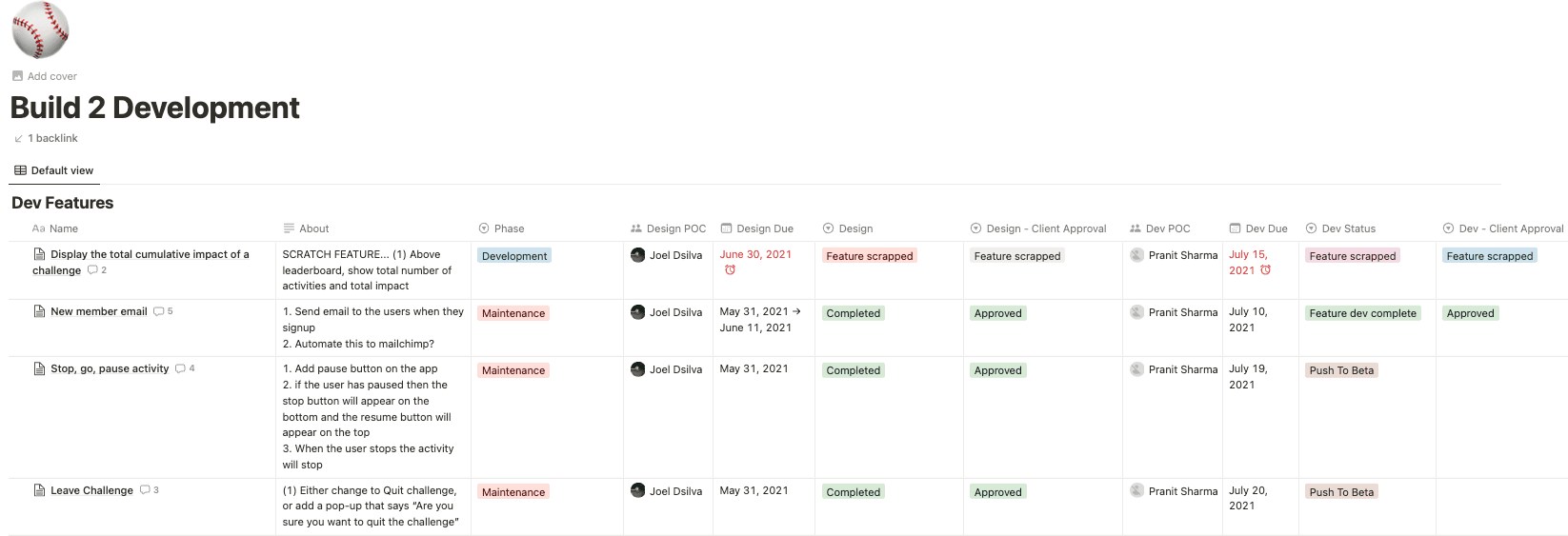
Planning and prioritisation as a two-level design system.
A practical system for connecting product bets with the delivery decisions that keep design work moving.